Feature writing
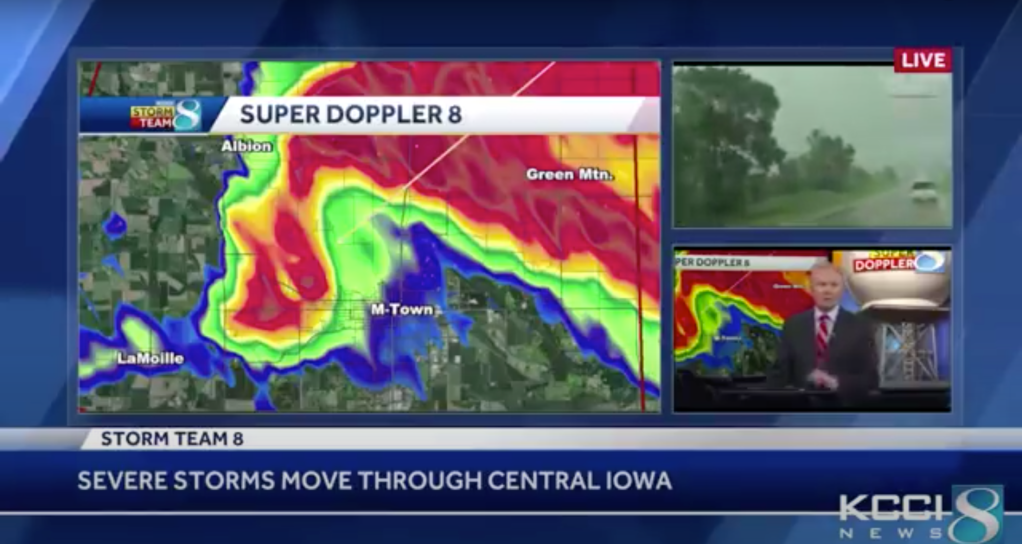
Poynter: Six years later: A retired meteorologist’s reflection on a storm he won’t forget
In the second week of my first professional job as news editor at my hometown newspaper, an EF3 tornado walloped our community. We huddled in the basement in the direct path, praying we would make it out alive. Anyone who experienced the storm that day wondered how no one died. Many, like me, thanked a higher power. But there was also something to be said for the meteorologists who kept viewers informed that afternoon. I often wondered what that day must’ve been like for weather forecasters like KCCI’s chief meteorologist Kurtis Gertz, who our family watched each night when I was growing up and had covered countless storms. I wondered was that day — July 19, 2018 — memorable to him, too, or was it just another day of doing his job?
As the storm’s six-year anniversary approached, I asked him. At his kitchen table, as he sipped a glass of vegetable juice, I told him I wanted to know anything he remembered, acknowledging that it might not be a lot given that it was now years later and he had covered many storms.
But he needed no such acknowledgment. He remembered every last hook echo, pixel on his Doppler radar and National Weather Service alert that came that day.
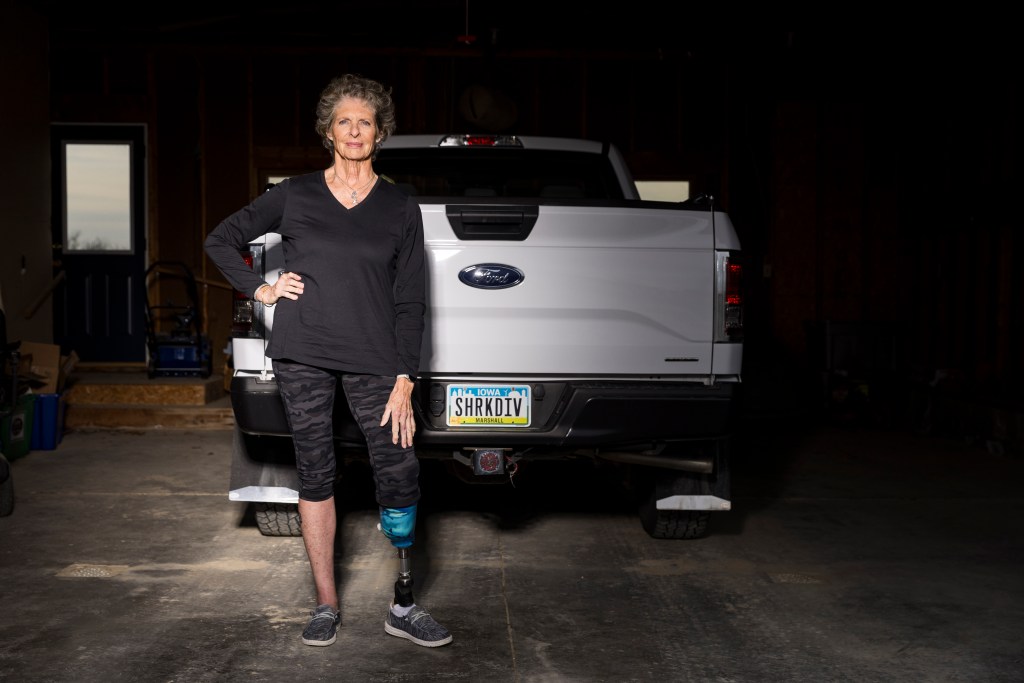
The Guardian: A 73-year-old scuba diver lost her leg to a shark. Now she’s back in the water
Heidi Ernst survived a shark attack while scuba diving in June of 2023. I interviewed her for the first time a couple months after the attack and asked if she’d be willing to let me follow her on her recovery journey as she got her prosthetic leg, a first step to getting back to all the things she loves, including scuba diving, running her acreage on her own and going back to work as a physical therapist. She graciously allowed me to attend her medical appointments, see her in her home and ask a zillion follow-up questions. (Photo by Kathryn Gamble.)
Survival mode: MHS graduate recovers from life-threatening collision in Croatia
Tim Wignall usually starts his day very early in the morning. When he saw his daughter Maddison was calling him at 4:30 a.m. on Sept. 6, he figured it was nothing out of the ordinary. He thought she was calling to check in from her trip in Europe. It would be about lunch time for her with the time difference.
Instead, what he heard on the other end of the line was a parent’s worst nightmare.
“Mr. Wignall, this is Maddison’s friend in Croatia. She’s been involved in an accident. She was on a scooter. She got run over by a taxi and she’s being life flighted to the hospital.” Continue reading on timesrepublican.com.
As told to stories
A medical scare helped Tara Geddes, a Le Mars nursing leader, better understand empathy
Christen Bain left a steady marketing role to study engineering
How Marlén Mendoza turned her empathy and skills into a business
Q&As
Disability Rights Iowa looks to grow its advocacy as it celebrates 40 years
6 trends in human resources that business leaders should know
Personal essays
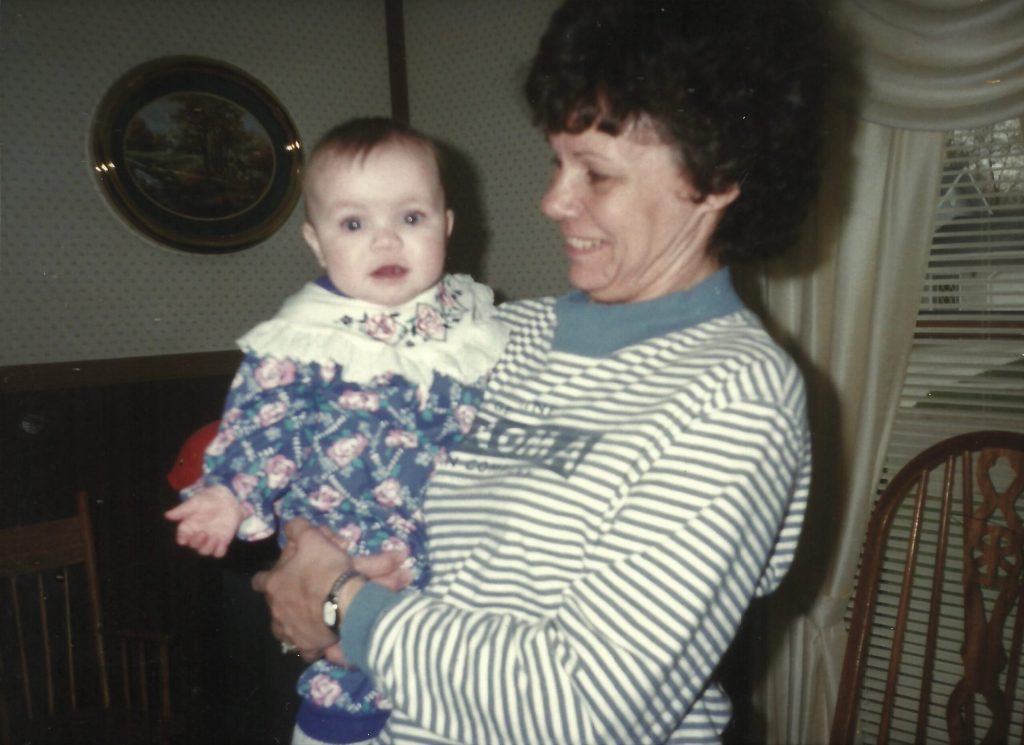
Essay: The treasure inside my grandma’s jewelry box
After her funeral in 2011 we opened her jewelry box. We found her watch, several copper bracelets to help with arthritis, tiny rings the circumference of a nail’s head, all different, with the birthstone of each grandchild.
The jewelry paled in comparison to what I discovered next. Continue reading on fearlessbr.com.
Essay: Young women can and are leading
“I often wonder, if we collectively stopped limiting girls and young women with both hidden and overt barriers, wouldn’t we all reap the benefits?” Read the essay on fearlessbr.com.
Journalism ethics analysis: NPR Public Editor
I write for NPR’s Public Editor team, which serves as a bridge between NPR and its audience. We answer questions from audience members about journalism ethics. We offer about NPR’s work and write about the importance of language choices.
Some of my other Public Editor pieces:
- What McDonald’s sales trends show
- Trump trial coverage
- Ageism in the news
- ‘Slave’ or ‘enslaved’?
- When covering car-cyclist collisions
- Journalism’s coverage of weight and size
(Illustration by Carlos Carmonamedina for NPR Public Editor)
 Emily Barske Wood — journalist, writer, editor