Feature writing
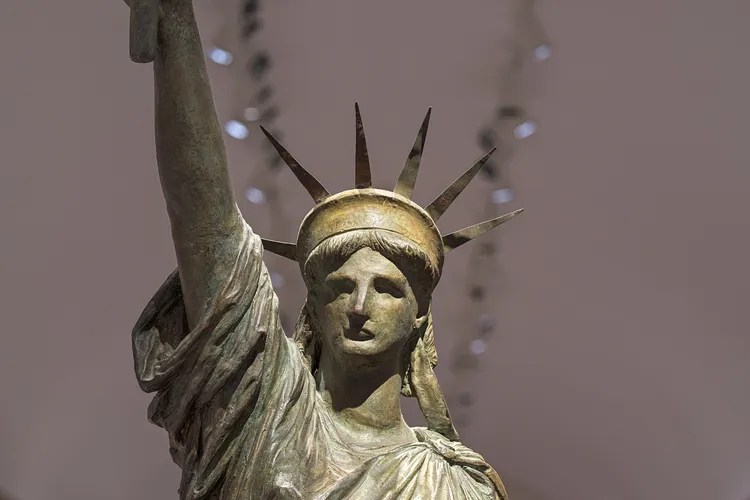
Smithsonian Magazine: This Remarkable Statue of Liberty Model Made by the Sculptor of the Original Has a New Summer Home at the Smithsonian Castle
As curator of sculpture at the Smithsonian American Art Museum, Karen Lemmey has watched the faces of everyone from kindergarteners to retirees light up when they see a nearly four-foot tall Lady Liberty, holding her tablet and raising her torch high.
“I think you can ask a kid almost anywhere in the U.S., ‘What is this?’ And they’ll be like, ‘I’ve seen that before. Is that the Statue of Liberty?’” Lemmey says. “It remains familiar, and it asserts itself. And that’s really hard for a monument from more than 100 years ago.”
Lemmey invites museumgoers to view the Liberty model as not only a monument, but a work of art that had public support and became a national icon.
The story explores the unique partnerships and public support needed to erect the Statue of Liberty and how its become a national icon since.
Other 250th coverage:
Smithsonian Magazine: The National Museum of American History Is Displaying 250 Objects to Commemorate the Country’s Big Birthday. Here’s the Story Behind Ten of the Artifacts
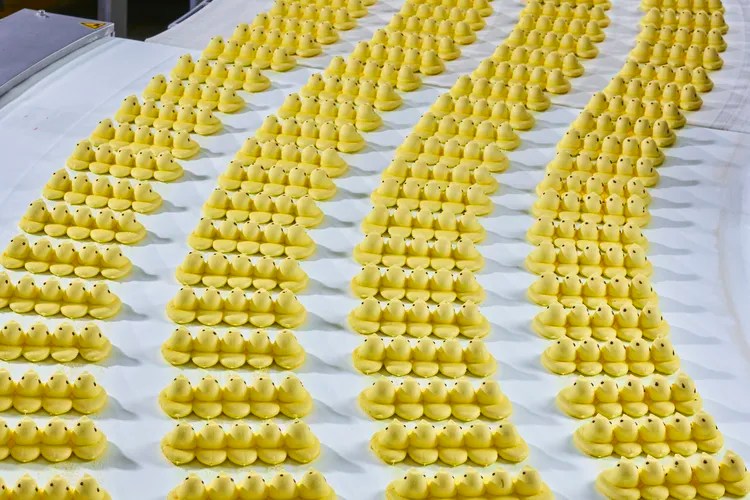
Smithsonian Magazine: See Amazing Images That Reveal the Strange, Otherworldly Beauty Hidden in American Factories
Photographer Christopher Payne has traveled the country to capture the beauty in American manufacturing and the craftmanship of factory workers.
“He’ll make a picture of something tiny, like a batch of pencils, and it looms large in his photo, and it looks like this big, gigantic, building-like edifice—and it’s pencils,” says Kathy Ryan, former director of photography at the New York Times Magazine. “But then he can also go in and photograph the largest jet engine you can imagine in an airplane manufacturing plant, and then that gets rendered in a smaller way.”
I interviewed him ahead of his Smithsonian exhibit “Made in America: The Industrial Photography of Christopher Payne,” which opened in late 2025. (Photo by Christopher Payne)
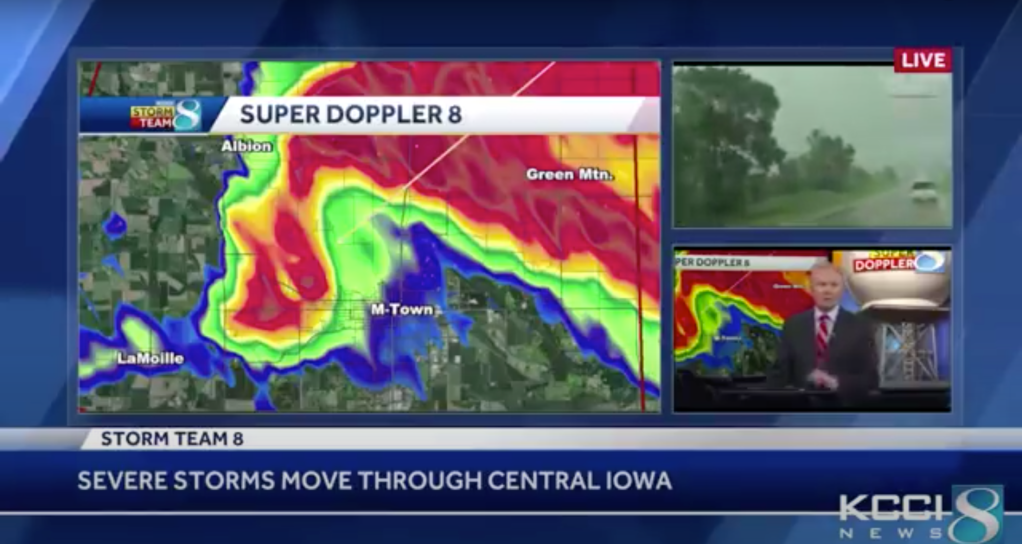
Poynter: Six years later: A retired meteorologist’s reflection on a storm he won’t forget
In the second week of my first professional job as news editor at my hometown newspaper, an EF3 tornado walloped our community. We huddled in the basement in the direct path, praying we would make it out alive. Anyone who experienced the storm that day wondered how no one died. Many, like me, thanked a higher power. But there was also something to be said for the meteorologists who kept viewers informed that afternoon. I often wondered what that day must’ve been like for weather forecasters like KCCI’s chief meteorologist Kurtis Gertz, who our family watched each night when I was growing up and had covered countless storms. I wondered was that day — July 19, 2018 — memorable to him, too, or was it just another day of doing his job?
As the storm’s six-year anniversary approached, I asked him. At his kitchen table, as he sipped a glass of vegetable juice, I told him I wanted to know anything he remembered, acknowledging that it might not be a lot given that it was now years later and he had covered many storms.
But he needed no such acknowledgment. He remembered every last hook echo, pixel on his Doppler radar and National Weather Service alert that came that day.
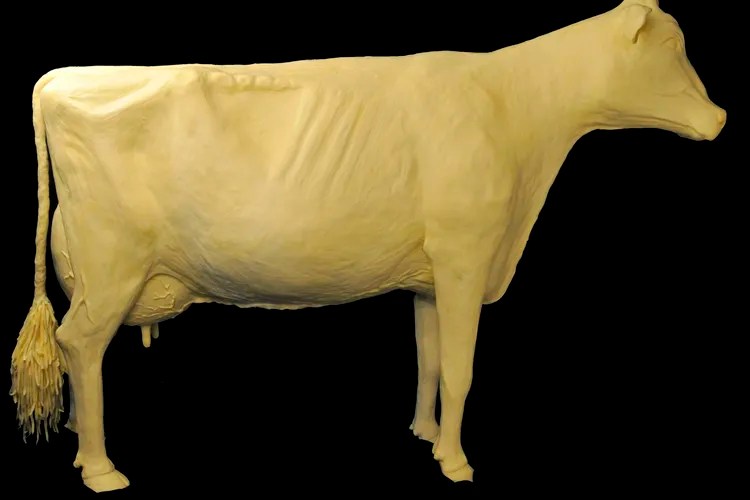
Smithsonian Magazine: How Life-Size Cows Made of Butter Became an Iconic Symbol of the Midwest
When twins Hannah and Grace Pratt moved from their tiny dorm at the University of Northern Iowa into their first apartment, their unused mini-fridge gave their mother, Sarah, extra space to store her art.
Sarah Pratt has sculpted the iconic life-size butter cow at the Iowa State Fair since 2006, after apprenticing for 15 years under renowned sculptor Norma Lyon. Her daughters officially joined her in 2017, though they’d been helping in the display cooler since childhood. The family also creates butter sculptures for fairs in Illinois and Kansas.
Carving the cow has become second nature to Sarah. Using a wire armature, she shapes 600 pounds of butter into a 5½-foot-tall, 8-foot-long cow over several days, always posed like a dairy show animal.
In 2023, the Pratts caught the attention of Smithsonian curator Mary Savig, who was touring state fairs for an exhibition on artists and fair traditions. Drawn to both their craft and story, she saw the family as a perfect fit.
I interviewed the sculptors ahead of the “State Fairs” exhibition at the Smithsonian’s Renwick Gallery.
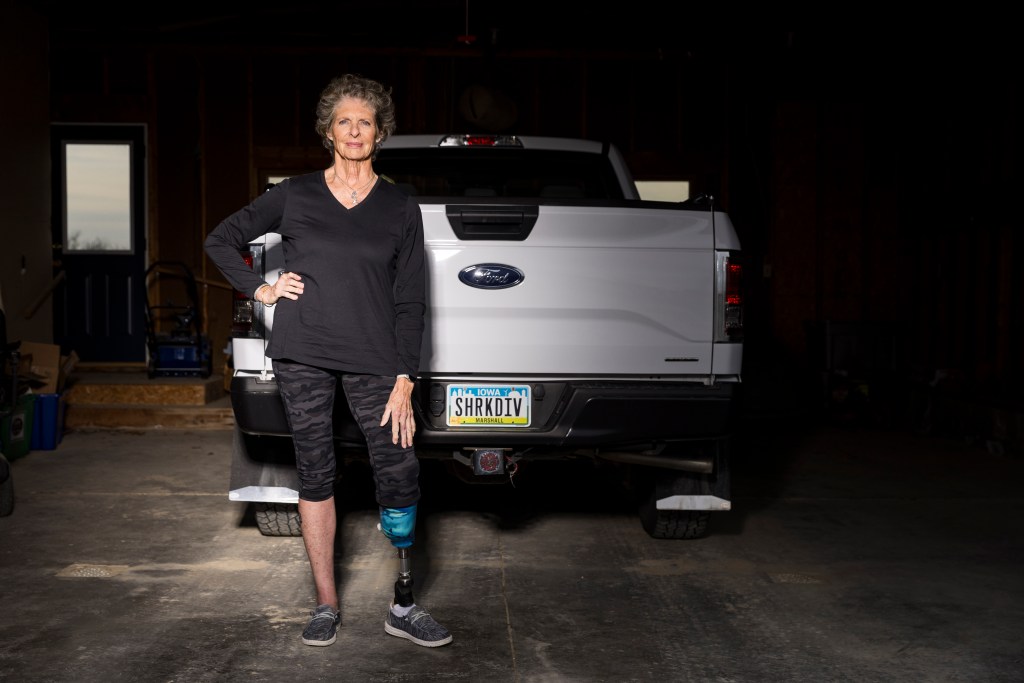
The Guardian: A 73-year-old scuba diver lost her leg to a shark. Now she’s back in the water
Heidi Ernst survived a shark attack while scuba diving in June of 2023. I interviewed her for the first time a couple months after the attack and asked if she’d be willing to let me follow her on her recovery journey as she got her prosthetic leg, a first step to getting back to all the things she loves, including scuba diving, running her acreage on her own and going back to work as a physical therapist. She graciously allowed me to attend her medical appointments, see her in her home and ask a zillion follow-up questions. (Photo by Kathryn Gamble.)

Inc. Magazine: How Big Tech’s New Data Centers Are Reshaping the Midwest
Meta campus sprawls in DeKalb, Illinois; Apple is expanding its footprint in Waukee, Iowa; Google recently announced plans to build its first Minnesota data center; and Microsoft is investing $3.3 billion into what it’s calling the world’s most powerful AI data center, in Mount Pleasant, Wisconsin. In the former fields and pastures reached by gravel roads, this burgeoning technology is a new bumper crop. As AI and cloud computing fuel data center demand nationally—the U.S. is currently home to more than 4,000 centers—construction is ramping up in the Midwest to meet the needs of tech companies.
It’s not just the open space that makes this area appealing to tech companies—it’s also the access to renewable energy and reliable power grids. Several Midwestern states, including Iowa, rank among the top in wind energy production. Illinois produces more nuclear power than any other state. That energy infrastructure matters because access to power—not location or cost—will be the primary site-selection factor for future data centers because of multiyear wait times to connect to the grid, according to commercial real estate company JLL. Many Midwestern states are attractive because they offer infrastructure tax incentives to data centers, coast-to-coast fiber connectivity cuts right through the middle of the country, and the area has diverse energy sources, says Andy Cvengros, co-lead of JLL’s U.S. data center markets team.
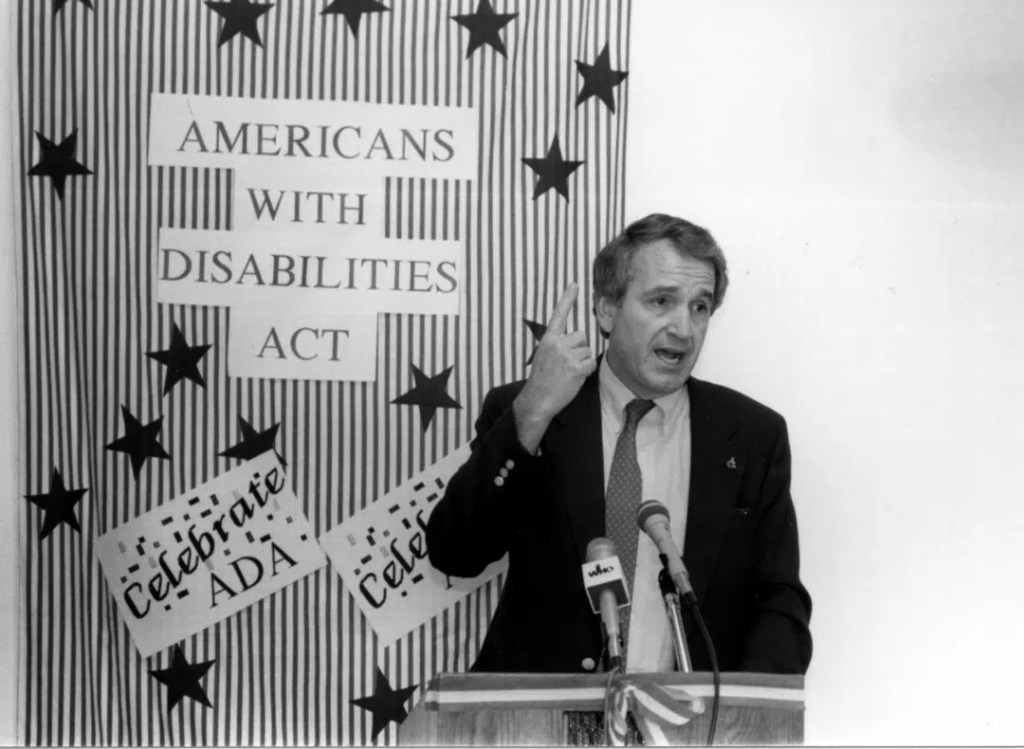
The ADA generation
Employers need workforce, but professionals with disabilities remain largely untapped even after 30 years of the Americans with Disabilities Act. Advocates want to change that.
When Alex Watters got a call about a job offer to be a field organizer for President Barack Obama’s reelection campaign, he hesitated. Not because he didn’t have the passion or experience for such a position, but because one of the core functions of a field organizer – knocking doors – was not something he could do.
Watters, who uses a wheelchair, jokes that he wasn’t going to throw rocks at doors that weren’t accessible as an alternative to knocking. But Zack Davis wasn’t looking for someone who could knock as many doors as possible. He was looking for a leader who could rally others to knock on doors, make phone calls and contribute to the grassroots campaign. So Watters accepted the position.
Months later, on a call with all the other field organizers across the state, State Director Brad Anderson asked the others on the call how it felt that the one field organizer who couldn’t himself knock on doors had a team that had knocked on more doors than anyone else in the state. Had the job simply been promoted as needing an organizer who could knock a certain number of doors, he wouldn’t have even thought of applying. This is why Watters, now an elected official himself on the City Council in Sioux City, has made it a point to advocate for accessible practices in hiring and gainfully employing people with disabilities.
It’s not always how he imagined his life would be.
Continue reading on businessrecord.com.
Survival mode: MHS graduate recovers from life-threatening collision in Croatia
Tim Wignall usually starts his day very early in the morning. When he saw his daughter Maddison was calling him at 4:30 a.m. on Sept. 6, he figured it was nothing out of the ordinary. He thought she was calling to check in from her trip in Europe. It would be about lunch time for her with the time difference.
Instead, what he heard on the other end of the line was a parent’s worst nightmare.
“Mr. Wignall, this is Maddison’s friend in Croatia. She’s been involved in an accident. She was on a scooter. She got run over by a taxi and she’s being life flighted to the hospital.” Continue reading on timesrepublican.com.
As told to stories
A medical scare helped Tara Geddes, a Le Mars nursing leader, better understand empathy
Christen Bain left a steady marketing role to study engineering
How Marlén Mendoza turned her empathy and skills into a business
Q&As
Disability Rights Iowa looks to grow its advocacy as it celebrates 40 years
6 trends in human resources that business leaders should know
Personal essays
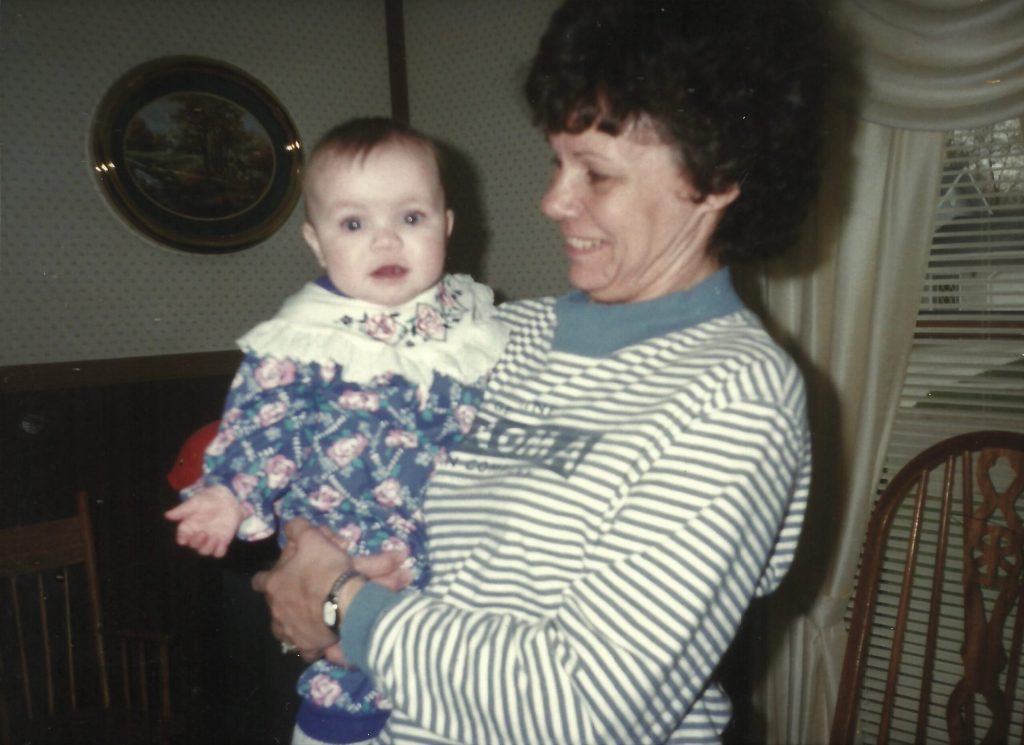
Essay: The treasure inside my grandma’s jewelry box
After her funeral in 2011 we opened her jewelry box. We found her watch, several copper bracelets to help with arthritis, tiny rings the circumference of a nail’s head, all different, with the birthstone of each grandchild.
The jewelry paled in comparison to what I discovered next. Continue reading on fearlessbr.com.
Essay: Young women can and are leading
“I often wonder, if we collectively stopped limiting girls and young women with both hidden and overt barriers, wouldn’t we all reap the benefits?” Read the essay on fearlessbr.com.
Journalism ethics analysis: NPR Public Editor

I write for NPR’s Public Editor team, which serves as a bridge between NPR and its audience. We answer questions from audience members about journalism ethics. We offer about NPR’s work and write about the importance of language choices.
Some of my other Public Editor pieces:
- What McDonald’s sales trends show
- Trump trial coverage
- Ageism in the news
- ‘Slave’ or ‘enslaved’?
- When covering car-cyclist collisions
- Journalism’s coverage of weight and size
(Illustration by Carlos Carmonamedina for NPR Public Editor)

